
Lighting Design for Homes
Designed by a specialist. Engineered by a Lutron Gold Dealer. Supported for the long term.
- Book A Consultation

Installation, Integration & Simplified Living
Lighting Design That Enhances Your Home
Lighting does more for a home than almost anything else we install, and it’s the thing most often got wrong — a whitewash of downlights, the wrong colour temperature, fittings that fight the architecture rather than supporting it. We are a Lutron Gold Dealer, the highest accreditation Lutron awards, and we’ve spent nearly twenty years designing lighting that’s properly specified from the start: the right light, in the right place, controlled simply.
We don’t add lighting to finished interiors. We design it alongside the architecture and the interior design, from the earliest stage, so the lighting is part of the room rather than something bolted on afterwards.

How we think about lighting
Most homes are lit functionally — enough light to see, not enough thought about how the room feels. Properly designed lighting works differently. It follows a sequence:
Architecture — the building defines the volumes, the surfaces and the natural light.
Interior design — the materials, colours and furnishings define what the light needs to complement.
Lighting design — we design the layers of light that bring both together: ambient light for the room, task light for practical use, accent light for artwork and features, and decorative light for atmosphere.
Emotion — the result is a home that feels different at 7am and 7pm, that changes with the season, and that responds to how you’re actually using each room. That response is what separates designed lighting from installed lighting.

Lighting design, not just lighting control
Control is the technology. Design is the thinking. Most companies start with the control system and work backwards. We start with the room — where light should fall, how it should feel in the morning and in the evening, how it works with the view, the artwork, the furniture and the architecture — and then specify the control system to deliver it.
The difference shows in the finished room. A controlled room has dimmable lights. A designed room has light that feels right without anyone thinking about it.

Simplicity
A lighting control system designed by Inspire Audio Visual enables users to control their lighting via keypads with engraved buttons or an app. We only specify systems we have our total faith in, offering simplicity and reliability. To find out more, please contact us using the button below.
Quality Craftsmanship
A lighting control system Inspire Audio Visual is engineered and installed to the highest possible standards. Our team are trained to deliver to quality levels beyond our clients expectations and our attention to detail is admired by our customers. To find out more, please contact us using the button below.
World Class Products
We use products from the worlds leading lighting control manufacturers to ensure our systems are reliable and efficient. With some offering lifetime guarentees, we can support your system for many years to come. To find out more, please contact us using the button below.
How we work
Our Process
Every lighting project follows the same disciplined sequence. The earlier we’re involved, the better the result — ideally at the same stage as the architect and interior designer, before first-fix electrics.

Discovery
We visit the property or review your architect’s drawings. We understand the rooms, the orientation, the natural light, and how you live in the house.
Lifestyle review
How do you use each room? When do you entertain? Where do you read, cook, watch films, work? The answers shape every lighting scene we design.
Architect and designer collaboration
We work directly alongside your architect and interior designer, sharing drawings and coordinating so the lighting supports the design intent rather than contradicting it.
Lighting concepts
We produce a lighting concept for each room — specifying the layers (ambient, task, accent, decorative), the colour temperature, the fitting types and the control logic.
CAD drawings
Full AutoCAD lighting layouts, circuit plans and wiring schedules. These are coordinated with the electrical contractor so every cable route and back box is in the right place before the walls close up.
Electrical coordination
We brief and coordinate with your electrician or electrical contractor during first fix, ensuring circuits, dimming modules and control wiring are installed correctly.
Installation and commissioning
We install all keypads, dimmers, processors and control equipment at second fix, then commission the Lutron, Control4 or Crestron system.
Scene programming
We programme every lighting scene for every room — morning, evening, cooking, entertaining, cinema, welcome home, goodnight. Scenes are built around how you told us you live, not factory presets.
Handover
We walk you through every scene, every keypad and the app. Then we remain your point of contact for adjustments, seasonal fine-tuning and ongoing support.
What makes great lighting
Natural light
Great lighting design starts with the daylight. Understanding how light enters the room, how it changes through the day and how the interior responds to it defines everything that follows.
Layered lighting
A single source of light flattens a room. Layered lighting — ambient, task, accent and decorative — gives a room depth, warmth and flexibility.
Colour temperature
The warmth or coolness of light changes how a room feels. We specify colour temperature precisely, room by room, to match the materials and the mood.
Colour rendering (CRI)
Not all light shows colour accurately. High-CRI light sources reveal the true colour of fabrics, artwork and finishes — essential in a well-designed interior.
Glare control
Visible glare from badly positioned or unshielded fittings ruins a room. We design for comfort: recessed, shielded and carefully angled light that illuminates without dazzling.
Lighting control
Scenes let you change the entire mood of a room — or the whole house — at one button. Morning, evening, entertaining, cinema, goodnight. The technology disappears; the experience stays.
Feature and architectural lighting
Staircases, alcoves, joinery, ceilings — architectural features deserve their own light. We design feature lighting that draws attention where it belongs.
Artwork lighting
Art needs light that reveals it accurately without damaging it. We specify gallery-grade lighting for private collections, with UV-filtered, high-CRI sources and precise beam control.

Where we sit in your design team
Lighting design works best when it’s part of the wider design conversation, not added at the end. On a typical project, we sit between your design team and the electrical contractor:
— Architect
Defines the building, the volumes, the openings
— Interior designer
Defines the materials, the palette, the furniture plan
— Interior designer
Defines the materials, the palette, the furniture plan
— Kitchen designer
Defines task and feature lighting in the kitchen
— Lighting design (Inspire AV)
Designs the lighting scheme, produces drawings, specifies control
— Electrical contractor
Installs circuits and wiring to our specification
— Homeowner
Lives with lighting that was designed around them from the start
We provide the drawings and the specification. Your electrician installs to our plan. We commission and programme the finished system. One point of accountability for the lighting from concept to handover.
Our lighting design
heritage
- Book A Consultation
Before becoming part of Inspire Audio Visual, our lighting design philosophy was developed under Design by Light, a specialist residential lighting practice founded by Benjamin Davies.
Today, that same philosophy continues within Inspire AV — combining nearly two decades of dedicated lighting expertise with one of the UK’s leading smart home integration teams. The result is a lighting design service that’s both creatively ambitious and technically deliverable.
Recentprojects
Work that sets
the standard.
- View Full Portfolio

- Lighting Design
York Lutron Lighting
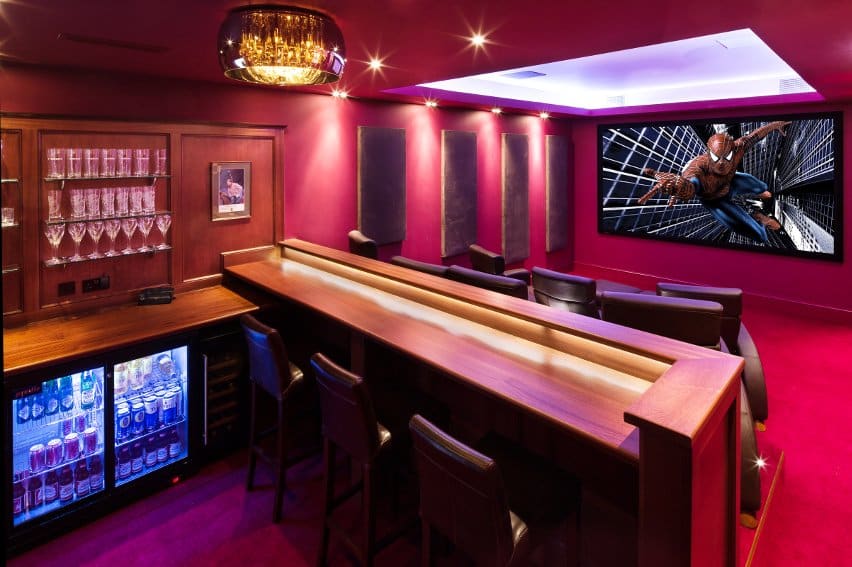
- Lighting Control
Yorkshire Lighting Design

- Smart Lighting
Cadogan Place Smart Lighting
Ourapproach
Control4 and Crestron
We’ve been a Control4 dealer for over 15 years and a Crestron Home installer, which means we can recommend the platform that genuinely suits your home and budget rather than the only one we know.
Both integrate fully with Lutron Installer and our home cinema installations.
Years certified
Award-winning platforms
Regions covered
FAQ
What's the difference between a lighting designer and an electrician?
An electrician installs circuits and fittings. A lighting designer decides where light should fall, what type and colour temperature it should be, how it should be controlled, and how it should make the room feel. We design the lighting and produce the drawings; your electrician installs to our specification.
What's the difference between Lutron and a standard dimmer switch?
A standard dimmer adjusts one circuit. Lutron lighting control lets you set whole-room or whole-house scenes — “evening,” “morning,” “film night” — at one button, and integrates lighting with blinds, heating and your wider smart home.
When should I involve a lighting designer?
As early as possible — ideally at the same stage as your architect and interior designer, before first-fix electrics. The earlier we’re involved, the more we can do and the less it costs to do it well.
Do you only install Lutron, or other systems too?
Lutron is our primary lighting platform and where our Gold Dealer accreditation sits, but we also design and install Control4 and Crestron lighting where the wider system requires it.
Can lighting control be added to an existing home?
Yes. A renovation or rewire is the easiest time to add full lighting control, but Lutron offers retrofit and wireless options for homes that aren’t being rewired.
Will lighting control work with my existing smart home system?
Yes — Lutron integrates with Control4, Crestron and KNX, so lighting becomes one part of a single, reliable control system rather than a separate app.
How much does a lighting design scheme cost?
It depends on the size of the property, the number of circuits and the complexity of the design. We provide a clear specification and cost at the design stage, before any commitment. Most whole-home lighting schemes start from around £15,000 for the control system, with design fees agreed upfront.
Do you work with my interior designer or architect?
Routinely — it’s how we prefer to work. We provide AutoCAD drawings and coordinate directly with your design team through the build process.
Lighting is never the first thing people notice. It’s the reason they don’t want to leave.
- Book A Consultation



Planning a project?
Bring us into the conversation early and we can help you protect the design, avoid technical compromises and give the client a better finished experience.
- Book A Consultation
- inspireme@inspire-av.com